
| Menu |
24
Dec
2019
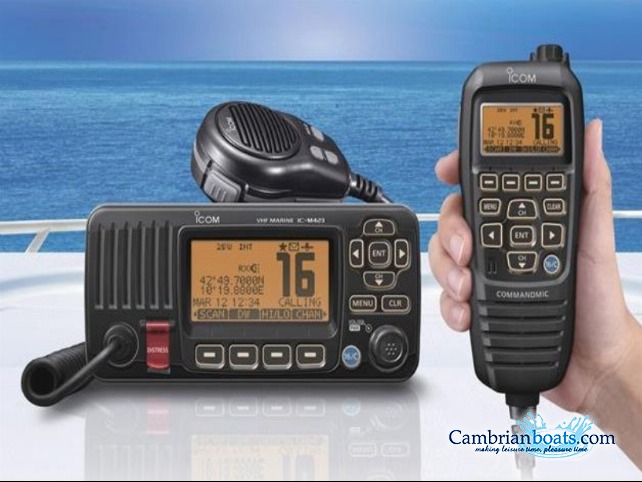
Hardly the most exciting of kit but ultimately could prove the most important in time of emergency. The Very High Frequency (VHF) radio comes in two guises, the handheld version or the fitted version. The former tending to more the domain of the boat owner of craft 20’ or less whereas larger vessels more usually sport the fitted type. The portable or hand-held radio has the flexibility to be portable as it remains with the holder however, the fixed type as less susceptible to being damaged or lost and invariably has a greater range due to a larger antennae fitted to the boat. Some mariners prefer to have both.
In the past decade radios have progressed to include Digital Selective Calling (DSC). This function sends a digital signal to another radio or broadcast an alert to other radio listeners that you are about make a broadcast, typically announcing a Mayday situation or alert others in the area to a boating hazard.
Obtaining a license for a VHF radio is relatively straightforward and once registered a Maritime Mobile Service Identity (MMSI) can be awarded. The MMSI is unique to the user and in the event of a Mayday, the coastguard can search the database for the user details. Courses are usually taken over a two day period and concluded with an exam.
At the start of this item we introduced the VHF radio as being essential during an emergency but it has many other uses. For those wishing to navigate in and out of marinas or locks it proves almost invaluable for contacting the authorities operating the gates. It can also be highly useful for sharing information with other boats although care must be taken not to use a channel designated for a specific purpose (e.g. Channel 16 is the distress channel for Mayday).
Should you wish to further this item by finding a course centre visit www.rya.org.uk